On this page
The short answer
Measure your cycling inseam, then compare it with the standover height published for the exact model and size. Leave 20 to 30 mm on a road or hybrid frame, 30 to 50 mm on gravel, and 50 to 100 mm on a mountain bike. Standover is measured at the midpoint of the top tube, with the tires at riding pressure.
- The 32 frames in our charts carry standover figures from 682 mm to 829.2 mm.
- The lowest figure is a hybrid frame, the highest an electric mountain bike.
- A number without the model year is not a standover figure you can check.
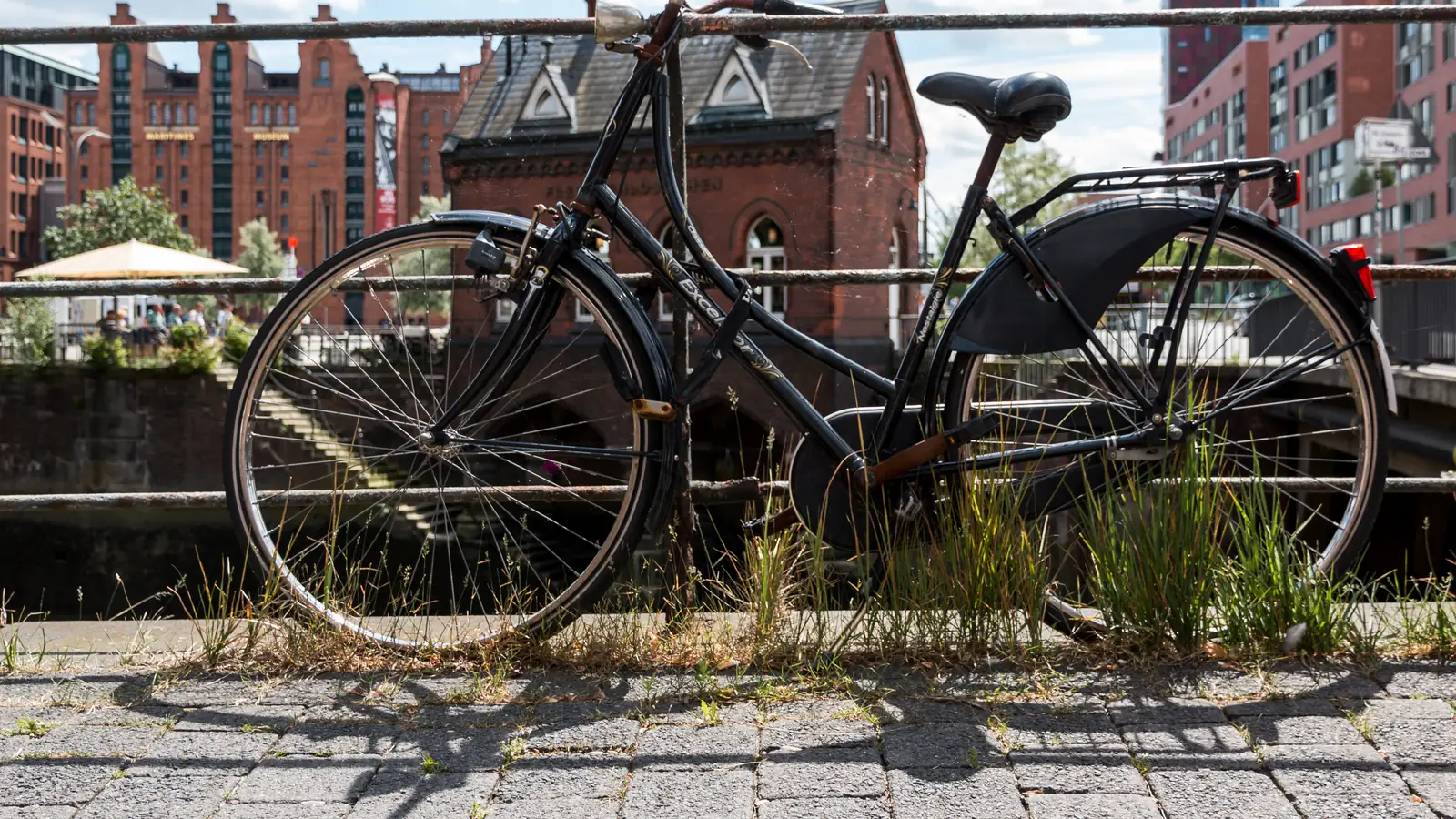
Check the size
How to measure a bike frameRead the same figures in one table, then check the size you picked in the bike size calculator.
01
What standover measures
Standover height runs from the floor to the top of the top tube, measured at the midpoint between the seat tube and the head tube. That point is where you straddle the bike when you stop. A frame that clears your inseam by a hand at the seat tube can still touch you at the midpoint if the top tube slopes.
Three conditions make the number repeatable. The bike stands on a hard, level floor. The tires carry riding pressure, because a soft tire drops the whole frame by a centimeter. The tape runs straight down from the top of the tube, not along the tube.
Standover is not the same figure as saddle height, seat tube length, or stack. Saddle height sets the pedaling position, and you change it with the seatpost. Standover belongs to the frame, and you cannot change it.
Three ways a standover figure misleads
- The brand measured at the lowest point of a sloping tube instead of the midpoint.
- The bike sits on flat tires or a carpeted floor.
- The figure belongs to another model year or another size.
Ask where on the top tube the figure was measured.
02
Measure the inseam you compare against
Standover compares against the cycling inseam, the distance from the floor to the crotch along the inside of the leg. Do not use the trouser inseam, which stops at the ankle bone, and do not use your height.
Measure barefoot against a wall, with a hardback book raised between the legs until it touches. Mark the wall at the top edge of the book and measure to the floor. Repeat the measurement, and keep the larger number. The difference between two readings is usually under a centimeter once you use a hard floor.
- Stand without shoes, back against a wall.
- Set the feet a hand apart and keep the weight even.
- Raise the book until it touches, then level it.
- Mark the wall at the top edge and measure to the floor.
- Repeat once and keep the larger figure.
Write the inseam in centimeters, not in inches.
03
Read standover from a geometry table
Every brand publishes geometry per size in a table with a standover column. Trek labels it stand over height, Specialized and Giant use standover, and Canyon publishes it beside stack and reach. The number is on the product page for the exact model year, and it is the only figure you can check without owning the bike.
Read the figure for the size you are considering, not the size the brand calls medium. The road frames in our charts run from 742 mm to 815 mm, so the label alone cannot tell you the clearance. The same is true of a letter size, because M covers a range of frames rather than one.
When the table gives a range, the brand is describing a top tube that slopes. Take the upper number, the point closest to the saddle, and compare that with your inseam. The upper number is the one your leg meets first.
Read the standover for the size you will buy, not the brand's middle size.
04
The 32 frames by bike type
The frames in our charts number 32, from 6 brands and 4 bike types. The figures run from 682 mm to 829.2 mm, a spread of 147 mm.
Mountain bikes carry the highest single figure, 829.2 mm, and a wide spread down to 702 mm. Road frames sit in a narrower band, from 742 mm to 815 mm. Hybrid frames carry the lowest single figure in the set, at 682 mm.
The type tells you how much clearance to leave, not what the number will be. A step-through city frame and a carbon road frame can publish the same standover figure and still ask for different clearance.
Road
- Frames
- 10
- Lowest
- 742 mm
- Highest
- 815 mm
- Range
- 73 mm
Gravel
- Frames
- 4
- Lowest
- 753 mm
- Highest
- 789 mm
- Range
- 36 mm
Mountain
- Frames
- 11
- Lowest
- 702 mm
- Highest
- 829.2 mm
- Range
- 127.2 mm
Hybrid
- Frames
- 7
- Lowest
- 682 mm
- Highest
- 778 mm
- Range
- 96 mm
Compare your inseam with the type you are buying.
05
The six highest standovers
The highest figures come from electric mountain bikes and endurance road frames. The Aventon Current ADV lists 829.2 mm at size Medium, and the Current EXP lists the same figure.
An inseam of 88 cm clears that frame by 50 mm, the minimum we recommend for a mountain bike. An inseam below 82 cm has no clearance at all on the same frame, and that rider should look at a smaller frame or a different model.
The last column is the shortest inseam that leaves the minimum clearance for that bike type, rounded to the nearest centimeter.
Aventon Current ADV
- Model year
- 2026
- Size
- Medium
- Standover
- 829.2 mm
- Shortest inseam for minimum clearance
- 88 cm
Aventon Current EXP
- Model year
- 2026
- Size
- Medium
- Standover
- 829.2 mm
- Shortest inseam for minimum clearance
- 88 cm
Canyon Endurace CF 7
- Model year
- 2026
- Size
- M
- Standover
- 815 mm
- Shortest inseam for minimum clearance
- 84 cm
Giant Defy Advanced
- Model year
- 2024
- Size
- ML
- Standover
- 796 mm
- Shortest inseam for minimum clearance
- 82 cm
Trek Checkpoint SL 5
- Model year
- 2024
- Size
- 54
- Standover
- 789 mm
- Shortest inseam for minimum clearance
- 82 cm
Specialized Allez Sport
- Model year
- 2026
- Size
- 54
- Standover
- 781 mm
- Shortest inseam for minimum clearance
- 80 cm
Compare your inseam with the shortest inseam in the table.
06
The five lowest standovers
The lowest figure belongs to the Verve 3 Lowstep at 682 mm, a lowstep hybrid frame at size M. The Aventon Level 4 follows at 687 mm. The lowstep frame removes the top tube between the seat tube and the head tube, which is why it can sit so low.
Low standover does not mean a small bike. The Verve 3 Lowstep at size M covers the same rider height as the Verve 3 Step-Over, and its reach differs by 2 mm. The frame shape lowers the tube while the rider height stays the same.
For a rider with a short inseam, a low frame is the direct answer. It removes the clearance question without giving up reach or saddle height.
Trek Verve 3 Lowstep
- Model year
- 2024
- Size
- M
- Standover
- 682 mm
- Shortest inseam for minimum clearance
- 70 cm
Aventon Level 4
- Model year
- 2026
- Size
- Regular
- Standover
- 687 mm
- Shortest inseam for minimum clearance
- 71 cm
Aventon Ramblas ADV
- Model year
- 2026
- Size
- Medium
- Standover
- 702 mm
- Shortest inseam for minimum clearance
- 75 cm
Giant Talon 4
- Model year
- 2025
- Size
- M
- Standover
- 709 mm
- Shortest inseam for minimum clearance
- 76 cm
Giant Trance X
- Model year
- 2024
- Size
- M
- Standover
- 737 mm
- Shortest inseam for minimum clearance
- 79 cm
Pick a low frame first when your inseam is short for your height.
07
Why electric frames sit higher
A battery and a motor change the frame. The Aventon Current ADV lists 829.2 mm at size Medium. The Trek Marlin 5 Gen 3 lists 747 mm at size M. The gap between them is 82.2 mm.
The gap inside one brand is wider still. The Aventon Ramblas ADV lists 702 mm and the Current ADV lists 829.2 mm, a difference of 127.2 mm at the same nominal size.
If you move from a non-electric mountain bike to an electric one, check standover before you check anything else. The motor and battery often sit in the down tube and the top tube rises to meet them, so the frame you can stand over on the shop floor may be the non-electric model.
Measure standover again when you switch to an electric model.
08
Same label, different frame
Hybrid frames in our charts run from 682 mm to 778 mm, a spread of 96 mm across frames a shop would call medium. Road frames run from 742 mm to 815 mm, a spread of 73 mm.
The largest single gap sits inside one model family. The 2024 Verve 3 Lowstep and Verve 3 Step-Over share a size label and a model year, and their standover figures differ by 87 mm. A shop that says "medium" has said almost nothing about clearance.
This is why the size label cannot answer a standover question. Read the figure on the geometry page for the exact frame, then compare it with your inseam.
Verve 3 Lowstep
- Model year
- 2024
- Size
- M
- Standover
- 682 mm
- Reach
- 385 mm
Verve 3 Step-Over
- Model year
- 2024
- Size
- M
- Standover
- 769 mm
- Reach
- 387 mm
Compare the geometry page, not the size label.
09
The clearance rule for each bike type
Clearance is your inseam minus the standover figure. Leave 20 to 30 mm on a road or hybrid frame, 30 to 50 mm on gravel, and 50 to 100 mm on a mountain bike.
The bike type sets the gap. On a road bike, a small gap keeps the frame stiff and the bars low. A mountain bike needs a large gap because you put a foot down on uneven ground, and a dropped saddle does not change the frame under you.
Work the sum in the other direction when you shop. Add the minimum clearance for the bike type to the published standover, and compare the total with your inseam. The Current ADV at 829.2 mm asks for 88 cm of inseam before it clears the floor by 50 mm.
If the sum comes out above your inseam, the frame is too tall. A shorter stem, a lower saddle, or a different handlebar does not change standover, because none of them moves the top tube.
Minimum clearance by bike type
- Road and hybrid: 20 to 30 mm.
- Gravel: 30 to 50 mm.
- Mountain: 50 to 100 mm.
Add the clearance to the standover, then compare with your inseam.
10
Check standover without a test ride
A buyer who cannot visit the shop still has the numbers. Open the brand's geometry page for the model and model year, find the size column, and read the standover figure. Then check the unit, because a few brands publish inches on a US page and millimeters on an international one.
Compare that figure with your inseam and the clearance rule for the bike type. If the frame passes, confirm the figure was measured at the midpoint of the top tube. When the page does not say, ask the brand or the seller, and treat an unlabeled number as the lowest point of the tube rather than the highest.
- Find the geometry table for the exact model year.
- Read the standover for the size you will buy.
- Check the unit and the measurement point.
- Subtract the standover from your inseam.
- Compare the result with the clearance for that bike type.
Five steps, one geometry page, no test ride needed.
Questions
Standover check FAQ
What is standover height on a bike?
Standover height is the distance from the floor to the top of the top tube, measured at the midpoint between the seat tube and the head tube. It tells you how much room you have when you put a foot down. The frame sets it, and no saddle or stem change moves it.
How much standover clearance do I need?
Leave 20 to 30 mm on a road or hybrid frame, 30 to 50 mm on gravel, and 50 to 100 mm on a mountain bike. The gap grows with the terrain and with how often you put a foot down. Measure standover at the midpoint of the top tube with the tires at riding pressure.
Where is standover measured on a sloping top tube?
At the midpoint between the seat tube and the head tube, where you stand. The seat tube junction is higher on a sloping frame, and the head tube end is lower, so the midpoint is the number that matters. Ask the brand which point its figure uses when the table does not say.
Can I change standover with a different saddle or stem?
No. Standover belongs to the frame, so a saddle, stem, or handlebar change leaves it where it was. If the frame is too tall, the answer is a different size, a lowstep frame, or a different model. A step-through frame removes the top tube and takes the question away.
Is a low standover frame a smaller bike?
Not necessarily. A step-through frame at size M can cover the same rider height as a step-over frame at size M, with the same reach. The 2024 Verve 3 Lowstep lists 682 mm of standover and the Step-Over lists 769 mm at size M, and their reach differs by 2 mm.
Why do electric bikes have higher standover?
The battery and motor sit in the frame, and the top tube often rises to meet the larger down tube. The 2026 Aventon Current ADV lists 829.2 mm of standover at size Medium, against 747 mm for the 2026 Trek Marlin 5 Gen 3 at size M. Check the electric model separately from the non-electric one.
What inseam do I need for a 54 cm road frame?
It depends on the model. Road frames in our charts run from 742 mm to 815 mm of standover, so a 54 cm label is not enough to answer. Add 20 to 30 mm of clearance to the published figure and compare that total with your inseam.
Does standover include the tires?
Yes. The figure is measured from the floor with the bike on its tires, so tire pressure and tire size are part of the number. A soft tire drops the top tube nearer the floor, and a wider tire raises it. Measure or compare with the tires at riding pressure.
Next steps
Check the size before you buy
How to measure a bike frame
Seat tube, top tube, standover, reach, and stack with one tape measure.
Bike size calculator
Turn height and inseam into a starting frame size.
Bike size for women
What a step-through frame changes, measured on one model year.
Bike wheel size chart
How tyre width and wheel diameter move the frame above the floor.
Sources
Where these numbers come from
Every figure comes from a published size chart, geometry table, or growth chart. Open a source to check a number against the page it was read from.